
About Tung Wah College
Tung Wah College (TWC) is a self-financing degree-granting tertiary institution incorporated in 2010 by the Tung Wah Group of Hospitals (TWGHs). Our mission is to provide high quality programmes focusing on practical application to nurture socially responsible and caring talents to meet the community needs. TWC is an approved post-secondary college registered under the Post Secondary Colleges Ordinance (Cap 320). All TWC’s programmes are accredited by the Hong Kong Council for Accreditation of Academic and Vocational Qualifications (HKCAAVQ). Currently, the College offers 21 degree, sub-degree and diploma programmes in both healthcare and non-health related disciplines and has a student population of 6,100+ (2026/27). The College is one of the associate members of the Alliance of Universities of Applied Sciences (UAS) and will pursue the UAS status and become a private university in parallel with our strengths in healthcare disciplines by 2026.[1]
Leadership and direction. TWC’s President is Professor Sally Chan, the College’s third President, appointed in January 2021. In its official 2027/28 material TWC states its own goal of advancing towards becoming a leading private university that is rooted in Hong Kong, serving the country and opening to the world — an institutional aspiration, not a guaranteed outcome or status.[1]
Official TWC figures at a glance — 6,100+ students (2026/27), 400+ staff, 8,100+ graduates to date and 21 programmes (1 PhD, 1 master’s, 13 bachelor’s, 4 sub-degree, 1 diploma, 1 certificate), per TWC’s official 2027/28 material. Details and sources in [1]. Last verified September 2026.
Why TWC
Practical, career-focused study: programmes built around internships and real work experience, strong industry connections through the Tung Wah Group of Hospitals network, graduate outcomes from TWC’s own published material and surveys — an overall average monthly salary of over HK$33,000 for graduates in 2025 (TWC official 2027/28 material) and a 2025 median monthly income of HK$35,667[2] — and a clear path toward private university status. See the full story on the Why TWC page.
Why choose TWC →Your partner: Youth Dorm HK
Youth Dorm is the official student dormitory operator and student recruitment partner for TWC (a strategic partnership since AY24/25) — a safe accommodation option for international students: convenient locations near campus, officially accredited and managed.
TWC officially lists the TST Dorm (Youth Dorm) at 182 Nathan Road, Tsim Sha Tsui — about a 3-minute walk from TWC’s Tsim Sha Tsui campus — as one of its dormitory options for non-local students, with all-inclusive monthly rents; from the AY2026/27 intake, the Sheung Wan Dorm joins the official options.[5] Room types, rents and arrival support are covered in the parent guide.
Boarding school guardians in Hong Kong — what families need to know →
-
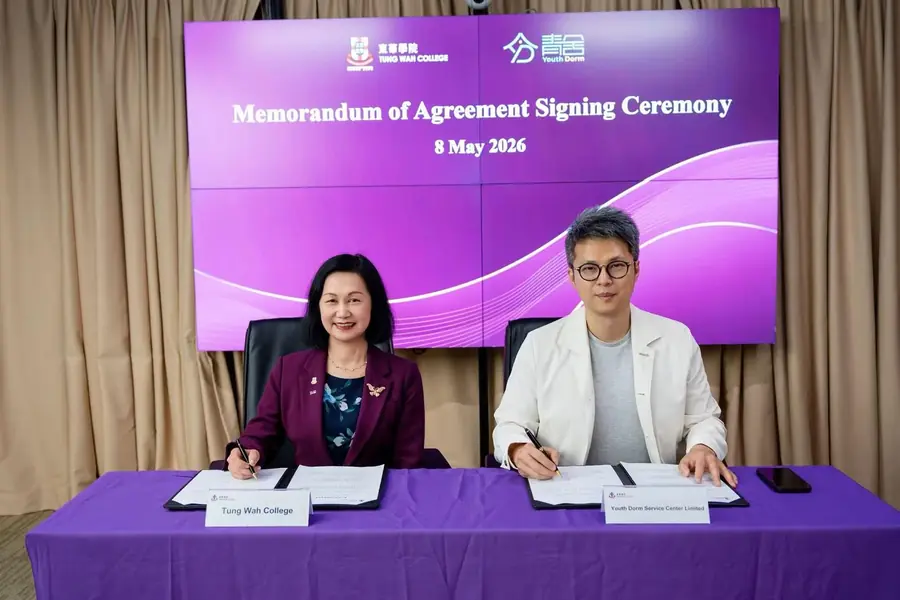
Tung Wah College × Youth Dorm — Memorandum of Agreement signing ceremony, 8 May 2026: Professor Sally Chan (President, Tung Wah College) and Raymond Lam (Founder, Youth Dorm) sign the agreement. -
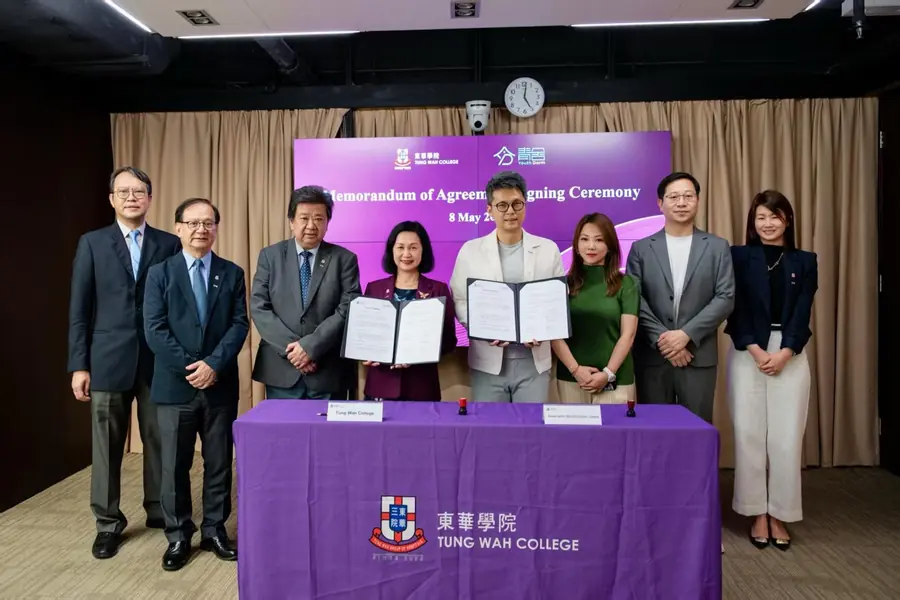
Tung Wah College × Youth Dorm — Memorandum of Agreement signing ceremony, 8 May 2026: the signed agreement held by both parties with attendees. -
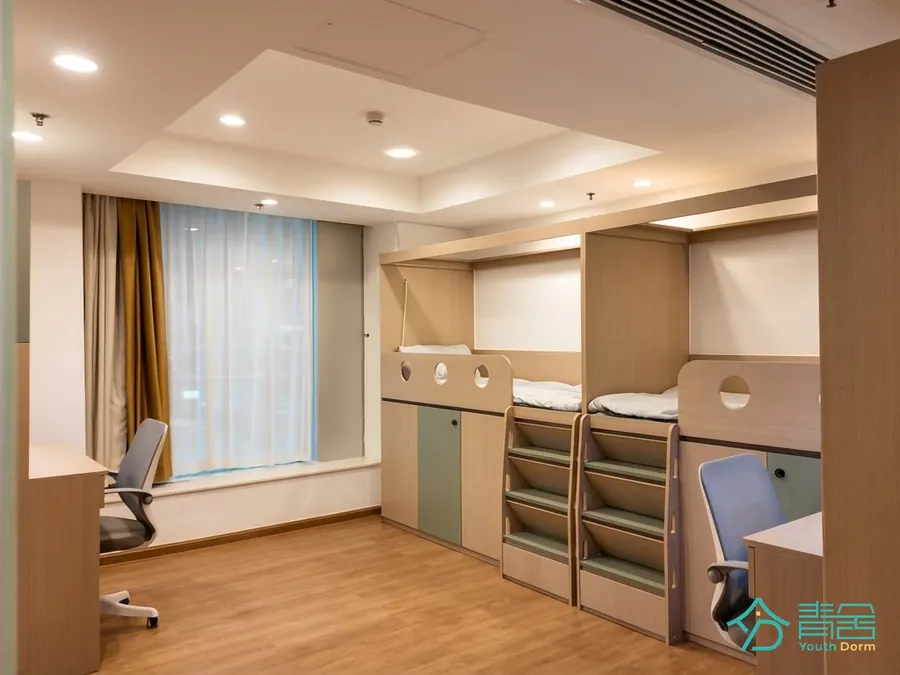
Quad room at the Sheung Wan Dorm (Youth Dorm) — official Youth Dorm photo.[6] -
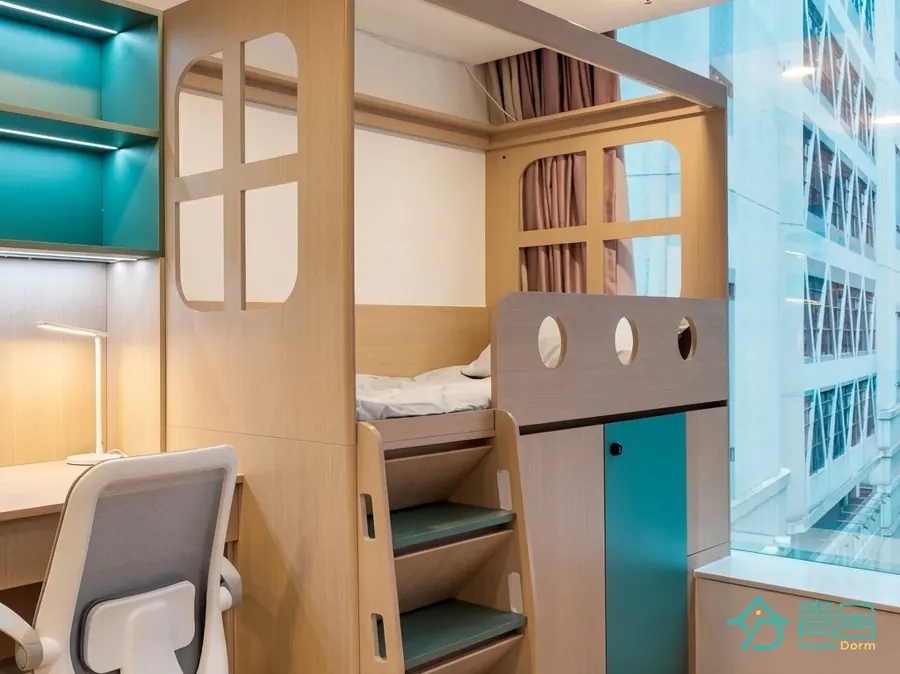
Bedroom area at the Sheung Wan Dorm (Youth Dorm) — official Youth Dorm photo.[6] -
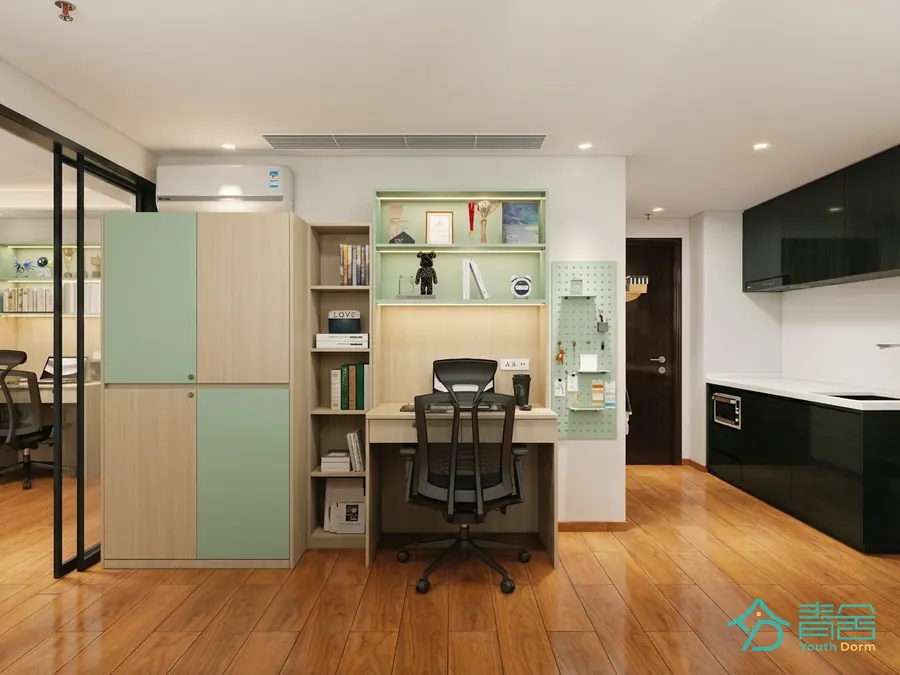
Study and kitchen corner at the Sheung Wan Dorm (Youth Dorm) — official Youth Dorm photo.[6]
Why study in Hong Kong?
World top-100 universities, official safety statistics, Greater Bay Area connectivity and post-study work arrangements (IANG) — find the full story on the Why Study in HK page.
Why study in Hong Kong →Entry requirements
TWC publishes official entry requirements for a wide range of international qualifications and country routes — from GCE A-Levels and the IB Diploma to Malaysian UEC, STPM and SPM, Singapore’s A-Level and polytechnic diplomas, India’s Class 12 board certificates (ISC / HSC / AISSC) and Pakistan’s HSSC. Requirements are published for 2027/28 entry on the Malaysia route (TWC official Malaysia leaflet, Sep 2026); other country routes still follow the AY2026/27 published requirements until TWC issues their 2027/28 material. Hong Kong’s academic year starts in September (Semester 1), so each entry page includes an academic-calendar note to help you plan. Find your route on the entry requirements index.[3]
Entry requirements index →Academic Units
TWC’s programmes are organised into four Academic Units (schools). TWC’s official 2027/28 material confirms seven bachelor’s programmes open to non-local applicants for 2027/28 entry; the two postgraduate programmes remain on the AY2026/27 reference[4] — explore each school for details, tuition and entry notes.
School of Arts and Humanities
Early Childhood Education, Applied Psychology, Applied Gerontology
Explore school →School of Management
Health Information and Services Management, Social and Business Sustainability, MSHSM (postgraduate)
Explore school →School of Medical and Health Sciences
Biomedical Science, Forensic Biomedical Science
Explore school →School of Nursing
Doctor of Philosophy in Nursing (postgraduate)
Explore school →Costs & scholarships
Non-local bachelor’s tuition for 2027/28 entry averages from about HK$93,400 to HK$136,510 per year depending on programme (TWC official 2027/28 material), and TWC offers Entrance Scholarships for International Students worth HK$30,000 each — renewable with cGPA 3.0+ up to HK$120,000 over four years. Full tables, AY2026/27 historical splits, payment caveats, postgraduate fees and dormitory rent benchmarks are on the costs page.
Costs & scholarships →Ready to explore your TWC study pathway?
Youth Dorm HK brings international student placement experience, a strategic partnership with TWC and a one-stop school–dormitory transition — from your first consultation to arrival in Hong Kong. Talk to a Youth Dorm representative for a free consultation on programmes, entry routes, costs and the application procedure. TWC makes all eligibility, admission, scholarship and offer decisions. Please do not upload identity documents, passports or full transcripts in the first enquiry form. You can also check the FAQ first.
Sources and notes
- Institution introduction follows TWC’s official wording. Programme count per TWC’s official programme catalogue (August 2026): 2 postgraduate, 13 bachelor’s degree, 5 sub-degree and 1 diploma programmes — 21 in total. The College also offers certificate programmes, which are outside this hub’s scope. Student population (6,100+ in 2026/27), staff population (400+), graduates to date (8,100+) and the 2027/28 programme breakdown (1 PhD, 1 master’s, 13 bachelor’s, 4 sub-degree, 1 diploma, 1 certificate — 21 in total) are per TWC’s official 2027/28 recruitment material (September 2026). President Professor Sally Chan (third President, appointed January 2021) and the stated goal of advancing towards a leading private university are also from that material and are TWC’s own statement. Last verified September 2026. Sources: TWC official 2027/28 material (Sep 2026); TWC programme catalogue; TWC milestones; vision & mission.
- Graduate income figures on this hub are TWC’s own published results: the overall average monthly salary of graduates in 2025 (over HK$33,000) is stated in TWC’s official 2027/28 recruitment material (September 2026); the 2025 median monthly income (HK$35,667) is from TWC’s 2025 graduate survey. Full details and sources are on the Why TWC page. Last verified September 2026.
- Entry requirements shown on this hub are TWC’s official published requirements. For Malaysia, the UEC and STPM/SPM requirements are published for 2027/28 entry in TWC’s official Malaysia leaflet (September 2026) — see the Malaysia entry page. For other qualifications and country routes the AY2026/27 published requirements (TWC entry pages last updated October 2024) remain the current reference: historical data / requirement, subject to change in future academic years and/or student circumstances. This hub will be updated as TWC publishes new information. Last verified September 2026. Source: Admission Requirements for Non-local Applicants (Bachelor’s Degree Programmes).
- Programme availability for the seven non-local bachelor’s programmes is confirmed for 2027/28 entry by TWC’s official 2027/28 recruitment material (September 2026); 2027/28 tuition is published there as an average fee per annum per programme. Postgraduate availability and the AY2026/27 splits and full-programme totals remain the AY2026/27 official reference — historical data / requirement, subject to change in future academic years and/or student circumstances. This hub will be updated as TWC publishes new information. Last verified September 2026. Sources: TWC official 2027/28 material (Sep 2026); Programme and Tuition Fee for Non-local Applicants and 2026/27 non-local fee schedule.
- Dormitory options and TST room rents are per Tung Wah College’s Non-local Students’ Campus and Living Guides 2026-27 (Student Affairs Office). They are the AY2026/27 reference; room types, availability and rents are set by the dormitory operator and are historical data / requirement, subject to change in future academic years and/or student circumstances. The Sheung Wan Dorm is being prepared for the AY2026/27 intake; the hub will be updated as TWC publishes new details. Sources: Non-local Students’ Campus and Living Guides 2026-27 (PDF); TWC Student Affairs Office — non-local student services.
- Sheung Wan Dorm photos are official Youth Dorm photos from the Sheung Wan residence listing on youthdorm.hk, shown for reference. Room types, availability and rents are set by the dormitory operator and are subject to change; speak to a Youth Dorm education specialist for the latest options.